Prepare context
Institutional profile, fiscal structure, team, projects, geographies, audiences, budget and documentation.

Growth OS reuses organization-confirmed information to reduce repeated work and keep decisions that still require human judgment visible.
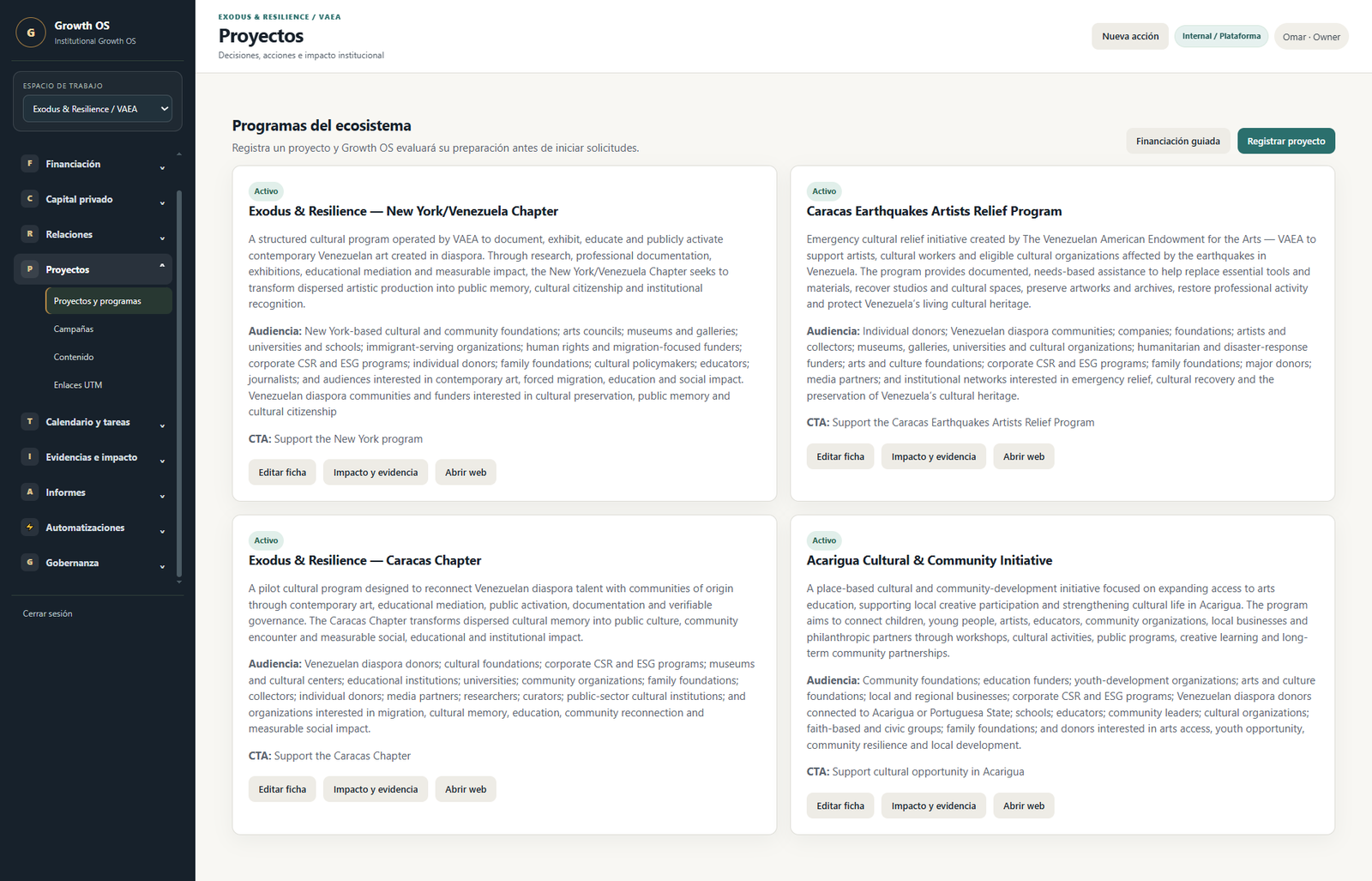
Institutional profile, fiscal structure, team, projects, geographies, audiences, budget and documentation.
Explore funding using eligibility, fit, effort, risk, source quality and blocker criteria.
When the plan allows it, connect funders, donors, partners, campaigns, major gifts and private capital with owners and next steps.
Coordinate applications, tasks, documents, decisions and, in Institutional, the manual and auditable philanthropic lifecycle.
Connect results, indicators, evidence, reporting and portfolio review without presenting unverified information as verified.
Recommendations show why there may be a fit and what still needs verification. Exclusionary blockers override scoring.
The recommendation preserves an explanation and does not replace human approval.
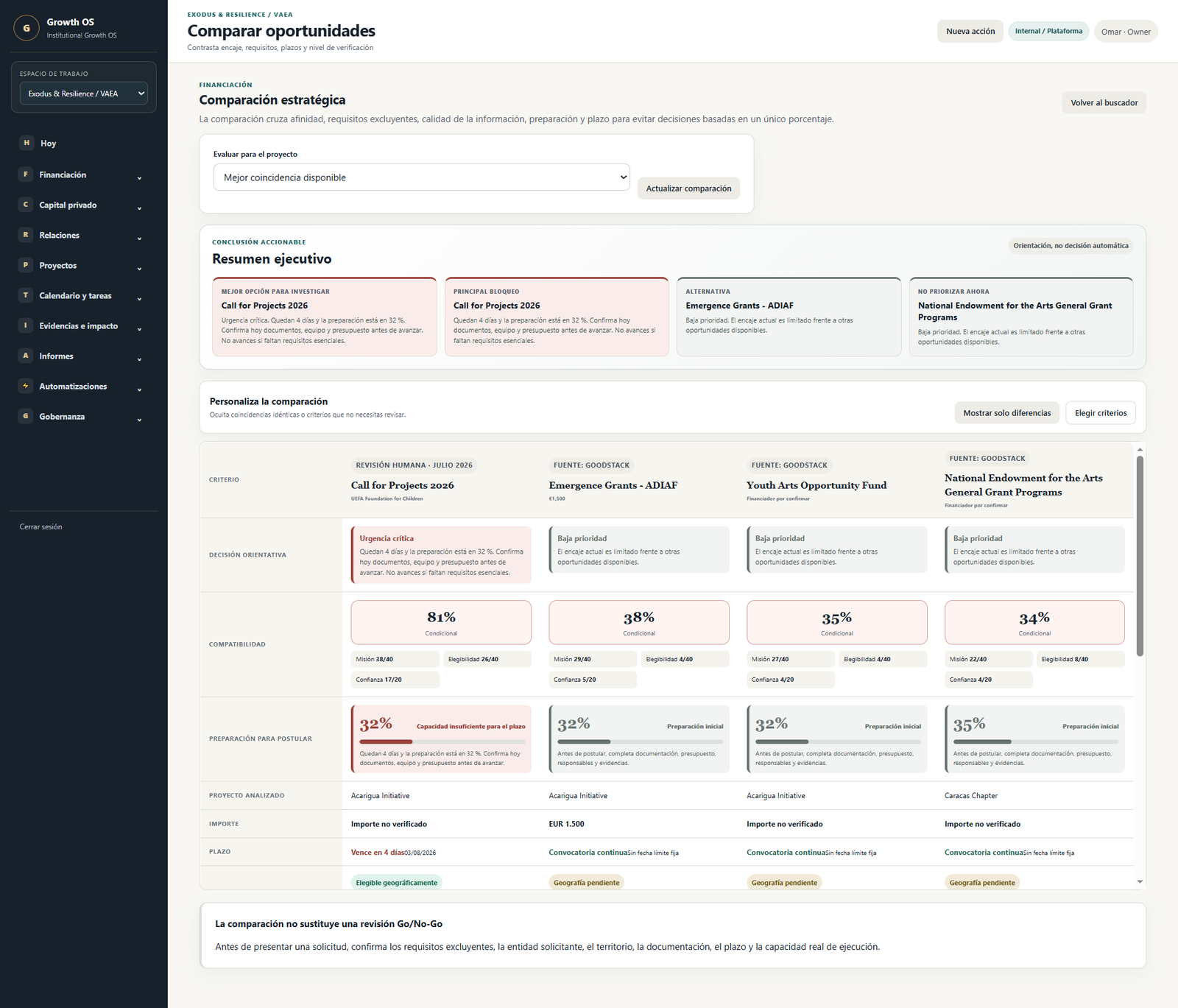
Alerts, tasks, structuring, comparisons, recommendations and selected integration workflows.
Growth OS does not award grants, approve beneficiaries or automatically decide philanthropic allocations.
The disbursement register is operational and auditable; transfers are executed outside Growth OS.
The demonstration can focus on funding, fundraising, CRM, private capital, projects, evidence, philanthropy or portfolio.